






Collection of Rigid Scopes at Angelus Medical & Optical
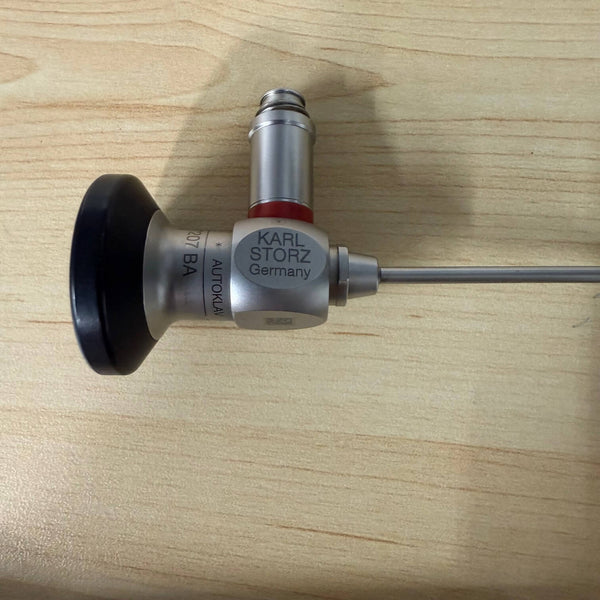
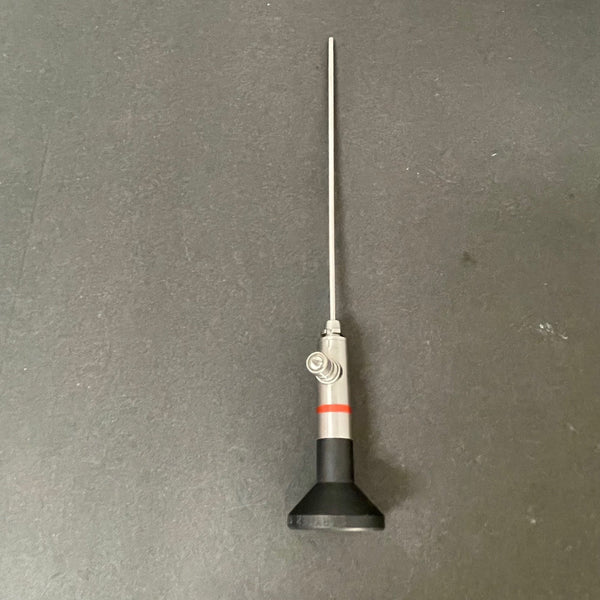
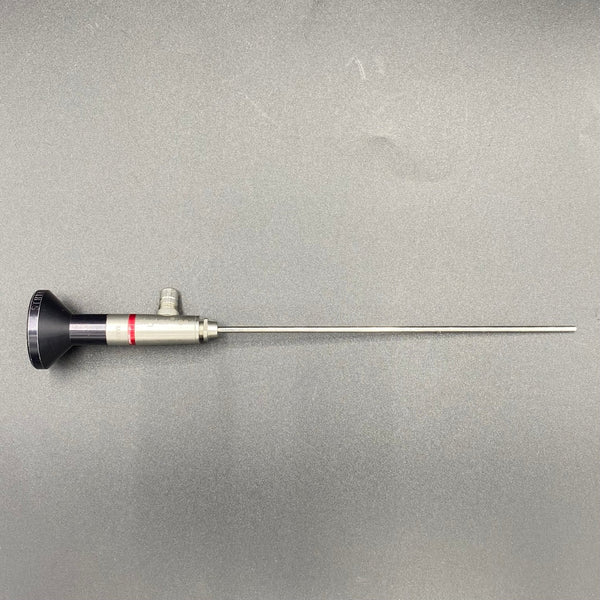
Rigid scopes, or rigid endoscopes, are straight, inflexible instruments used to visualize internal structures during minimally invasive procedures. Unlike flexible scopes, they provide a stable, high-resolution image through a rod lens system. They are commonly used in specialties such as ENT, urology, gynecology, orthopedics, and general surgery.
Rigid scopes are inserted through small incisions or natural orifices to examine or operate on internal organs. Common procedures include:
- Laparoscopy (abdominal cavity)
- Arthroscopy (joints)
- Cystoscopy (bladder)
- Hysteroscopy (uterus)
- Sinus endoscopy (ENT)
They are often paired with a camera and light source for real-time imaging on a monitor.
Benefits
- Exceptional image clarity due to rod lens optics
- Stable and precise—ideal for delicate surgical work
- Durable construction for repeated sterilization
- Wide range of viewing angles (0°, 30°, 70°, etc.)
- Reusable and cost-effective over time
Key Features
- Rigid stainless steel shaft in various lengths and diameters
- Rod lens system for high-resolution imaging
- Eyepiece or camera coupler for video integration
- Light post for fiber optic illumination
- Autoclavable for sterilization
- Multiple viewing angles for anatomical flexibility
Frequently Asked Questions
-
What is a rigid scope used for?
It’s used to visualize internal organs during minimally invasive procedures like laparoscopy or arthroscopy. -
How is it different from a flexible scope?
Rigid scopes are straight and offer higher image clarity, while flexible scopes bend to navigate curved anatomy. -
What sizes are available?
They come in various diameters (typically 2.7–10 mm) and lengths depending on the procedure. -
Can they be sterilized?
Yes, most are autoclavable and designed for repeated sterilization. -
Do they have working channels?
Some models include channels for instruments, suction, or irrigation. -
What viewing angles are available?
Common angles include 0°, 30°, 45°, 70°, and 90°, depending on the application. -
Are they reusable?
Yes, with proper care and handling, they can be used for years. -
What are they made of?
Typically stainless steel with optical glass components. -
Can they be used with a camera?
Yes, they often connect to a camera system for video display and recording. -
Are they fragile?
While durable, the internal rod lenses are delicate and require careful handling. -
What specialties use rigid scopes?
ENT, urology, gynecology, orthopedics, general surgery, and more. -
Do they require anesthesia?
Most procedures using rigid scopes are done under local or general anesthesia. -
Can they be used in children?
Pediatric-sized scopes are available for smaller anatomy. -
How are they cleaned?
Through manual cleaning followed by high-level disinfection or sterilization. -
Are they expensive?
They are an investment but cost-effective due to their reusability and durability.